

Mikhulu’s reflections on the Bana Pele Leadership Summit
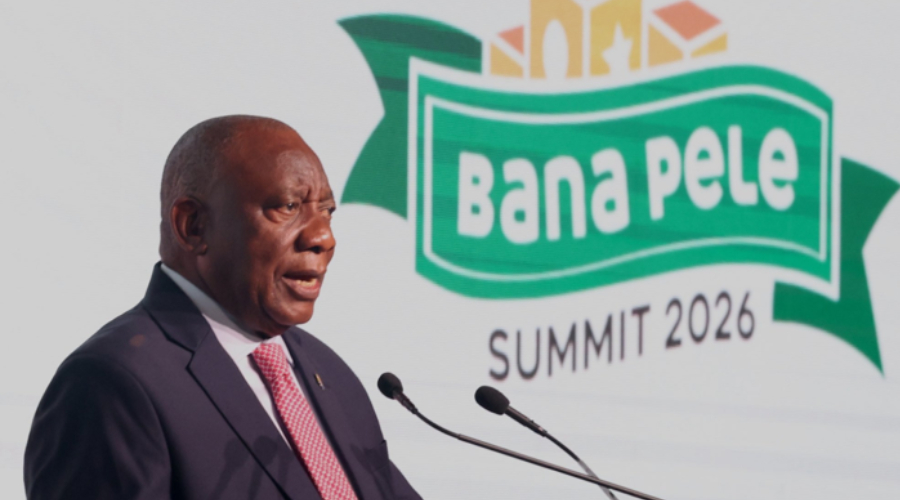
On Monday, 19 October 2026, President Cyril Ramaphosa gave the keynote address at the second Bana Pele Leadership Summit in Sandton, under the theme “From Blueprint to Movement.” The same day he published an open letter to the nation on early childhood development.
Mikhulu’s vision is that all parents are supported to build positive, nurturing and stimulating relationships with their young children, so we read both texts closely.
We welcome much of what they say, and we also want to add a voice we think the movement needs more of: parents.
Generation Beta
The President described a generation of children who will know how a smartphone works before they open a picture book, and argued that as technology advances, human foundations matter more. We agree. We also agree that early learning is more than childcare, and that children need a strong start in literacy and numeracy if they are to read for meaning by Grade 4.
We do have one caution: structure should not crowd out warmth. Children learn through relationships first, at home as much as in a centre. Parents are most likely to be the significant adults in a child’s life during the critical early years of brain development and language acquisition, so support for them is vital.
Slow Progress
There is real progress to welcome. More than 39,000 early learning programmes are now registered and caring for over 1.6 million children, the norms and standards have been revised, the Children’s Amendment Bill is going to Parliament, and the daily subsidy has gone up.
But the gap is still wide.
The letter says more than 1.3 million children aged three to five are not in any early learning programme, mostly in poorer communities where even a low fee is out of reach. The speech put the figure at around a million. Either way, that is a lot of children, and reaching an additional 300,000 by 2027 and 900,000 by 2030 will take sustained effort. We support the President’s view that a centre struggling to meet registration requirements should first be asked what help it needs, although that approach only works if there are people and money behind it.
The Importance of Parental Support
For many children, the first early learning programme is not a centre – it is a mother, a father, a grandmother or another caregiver.
That will stay true for children who aren’t enrolled, and for those who are, because most of a young child’s waking hours are spent outside any centre.
The speech closed by speaking directly to parents and caregivers, and said the goal will be reached by working with them. Mikhulu was founded on the belief that parents are their children’s first and best teachers, and we would like to see that belief built into the plan itself. The Bana Pele Shared Blueprint is a roadmap to universal access to early learning. We think it will work better if support for parents sits inside it instead of beside it.
That support needn’t be complicated or expensive. Our flagship programme is dialogic book-sharing with wordless picture books. A caregiver doesn’t need to read the words, because there are none. They look at the pictures with their child, talk about what they see and follow the child’s lead. Any caregiver can do this, whatever their schooling, with the right tools and a bit of encouragement. It builds the kind of relationship that helps children become resilient and curious. We work with government and other social services to build it into the services they already offer families.
The Impact of Technology
The President said technology cannot replace love, care or good teachers, and that matches what we hear from parents, who have a lot to add from the home front.
Our September 2026 Voices from the Field piece shared what parents and caregivers tell our team in home visits, parent groups and ParentlineSA focus groups. Three themes came up:
- Safety issues often puts the phone in a child’s hand. Many parents no longer feel safe letting children play outside unsupervised. A phone or tablet keeps a child quiet and contained, and the parent knows where they are.
- Schools are moving to screens, and parents are left to set the limits. Some schools now treat a device as required stationery, so parents struggle to say “put it away” when the same screen holds the homework. Other families have no home wifi or second device, and their children fall behind for reasons that have nothing to do with ability.
- Parents are also short of time. They told us they would love to play more, but work, commutes and the demands of the day leave little room. Handing over a phone is often just what is available.
We also found that screen time alone doesn’t seem to be the problem. What matters more is whether an adult is in the room, asking what the child is watching and suggesting a book on the same topic afterwards. If technology is to help, as the President hopes, it needs that human presence alongside it, and it only reaches children whose families can get it in the first place.
The Work of Practitioners
The letter tells of a centre in Bizana in the Eastern Cape whose staff kept it open when they couldn’t be paid, and who wouldn’t turn away a child whose family couldn’t afford the fee. The story shows real dedication. It also shows a system that has relied on unpaid work. The President has pledged recognition for practitioners, and that is welcome, but it must come with reliable pay, fully paid subsidies and a route to qualifications. The same goes for the women who run small centres in their own communities. If early learning is part of the care economy, the people doing the caring must be paid fairly.
What Happens Next
The speech ended with calls to municipalities, community, traditional and faith leaders, business, philanthropy, donors, and families. What counts is what happens once the speeches are over. For Mikhulu, that means staying close to the parents and caregivers we work with, sharing honestly what we hear from them, and meeting the same standard of measurable results we ask of others.
The President said starting late should not mean starting slowly. The children are already here, and so are their parents. The movement needs room and support for both.
Mikhulu Trust works in partnership with communities in South Africa to provide psychosocial support, mentoring, and capacity building. For more information, visit www.mikhulutrust.org


