

Strengthening Families in the Face of Substance Abuse in Khayamandi
Voices from the Field | Mikhulu Trust
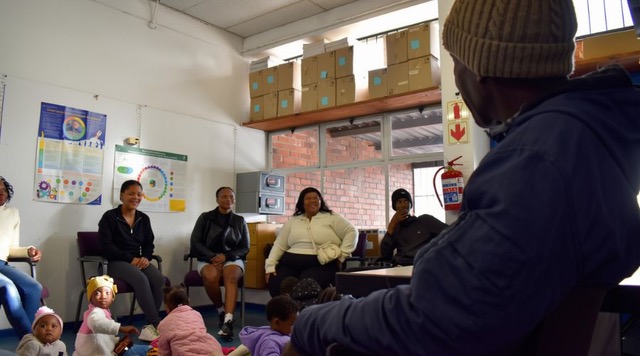
A growing emergency in Stellenbosch’s rapidly changing township reveals a community reaching for support — and a system that isn’t reaching back.
Something has shifted in Khayamandi (Kayamandi). Those of us working in the community — running psychosocial support groups, sitting across from mothers and fathers and teenagers in moments of real vulnerability — can feel it. Substance use has moved from something whispered about in private to something people are willing to name in a room full of others. That matters. Naming a problem is the first step toward solving it, and this community is already taking it. Although these challenges are affecting the community of Khayamandi, we know that this is not a problem specific to the area and is one affecting many other communities in the Western Cape, and South Africa at large.
Over the past year, substance abuse has emerged as one of the defining challenges in our group work in this Stellenbosch township. Session after session, clients disclose struggles with weed, tik and alcohol. Some ask for help directly — a sign of courage and trust that shouldn’t be squandered. Three clients in recent months have come forward seeking support for substance use specifically. Small as that number sounds, it’s only the people willing to speak up, the visible tip of a much larger problem.
People want help, and they’re willing to ask for it. The system simply isn’t built to receive them.
Adults seeking help for substance abuse in Khayamandi face a cruel irony: the government institutions offering free, accessible rehabilitation services are designed largely for minors. Adults fall into the gap between them — pointed toward private facilities they can’t afford, or referred to Department of Social Development offices where long queues and limited capacity turn people away before they’re even seen.
There is a referral pathway to organisations like ABBA Stellenbosch, but in a Xhosa-speaking community, services delivered primarily in Afrikaans present a real barrier. For someone already working up the courage to ask for help, being met in the wrong language can be the difference between feeling seen and walking away.
At Mikhulu Trust, our social worker offers one-on-one support, but we are not a rehabilitation facility. We are a bridge — and right now, the other side of that bridge is missing.
The Shadow of the Dop System
To understand substance use in Khayamandi today, it helps to understand how the township came to exist. Khayamandi was established in the early 1950s under apartheid-era segregation laws, built specifically to house Black migrant men who worked on the surrounding farms — not families, not communities, but labour. This followed the broader migrant labour system used across the country, which deliberately kept workers separated from permanent family life; the hostels built to house them became notorious for overcrowding and hardship. Alongside this, the dop system — paying farm workers partly in wine — took root across the Cape winelands, and over generations wove alcohol into the economic relationship between farmworkers and farm owners.
Labour without family on one side, wages paid in alcohol on the other: two systems that laid down a foundation this community did not choose. That history explains a great deal about today’s patterns, even as it excuses none of it. Khayamandi has spent seven decades building family life, culture and mutual support inside conditions engineered to prevent exactly that. The resilience visible in our support groups today — people choosing, together, to face substance use head-on rather than in silence — is the same resilience that built this community in the first place.
Khayamandi is also changing fast: new residents, rapid development, growing urban pressure. Growth without matching social infrastructure creates real strain, and where a community has energy and ambition but too few outlets for either, substances fill the gap. Boredom and unemployment do much of that work — a community without enough to do, and too little hope, becomes fertile ground for addiction. It’s a solvable infrastructure problem, not a failure of character.
The Ripple Effect in the Room
Inside our support groups, the impact is tangible. Attendance becomes inconsistent. Participants arrive tired, withdrawn, struggling to engage. The presence, focus and connection that group work depends on are eroded by substances that dull and disorient. It becomes harder to help people — not because they don’t want help, but because addiction is already governing their time, their energy, their choices.
And yet those same groups are where the problem is being named. In one of our previous groups, participants collectively chose substance abuse as the central theme they wanted to address in their psychosocial sessions — a sign that the community recognises what’s happening and isn’t in denial. In the only forum available to them, they are asking to be taken seriously.
When Children Are Not Safe Either
Substance use is also reaching young people earlier. Community workers across our network are seeing cannabis use connected to school-based incidents, including a small number of cases severe enough to result in disciplinary action.
What Needs to Change
We are not writing this to lament without direction. The community of Khayamandi deserves more than our concern — it deserves action.
We are calling for:
- Publicly funded adult rehabilitation services accessible in Xhosa and English, within the Stellenbosch area.
- Streamlined referral processes at the Department of Social Development that don’t require hours of waiting for a brief intake conversation.
- Investment in youth diversion and early intervention programmes at schools in Khayamandi and surrounding areas.
- Honest recognition of the dop system’s historical legacy in any policy conversation about alcohol abuse in the Western Cape.
- Support for frontline community workers — counsellors, mentors, group facilitators — who are absorbing this crisis daily with insufficient backup.
Khayamandi has shown up despite the difficulties stacked against it. It’s time the system did too.
Mikhulu Trust works in partnership with communities in the Western Cape to provide psychosocial support, mentoring, and capacity building. For more information, visit www.mikhulutrust.org


