

In 2020, Mikhulu adapted its Dialogic Book-sharing for Pre-School Teachers (DBS-PS) programme for early childhood educators in Namibia. Working with the University of Namibia and the University of Reading, we trained and assessed teachers across eight ECD centres in Windhoek — through a pandemic. This series of five infographics presents what we found, and why it matters for ECD settings across the region.
What is Dialogic Book-Sharing in the Classroom?

Book-sharing is not the same as reading aloud. Dialogic Book-Sharing (DBS) is an interactive approach that turns storytime into a shared learning experience — one that builds children’s language, attention, and social understanding. This infographic introduces what makes book-sharing “dialogic” and explains why wordless picture books, where the story is unwritten, are such a powerful tool.
The Training Journey
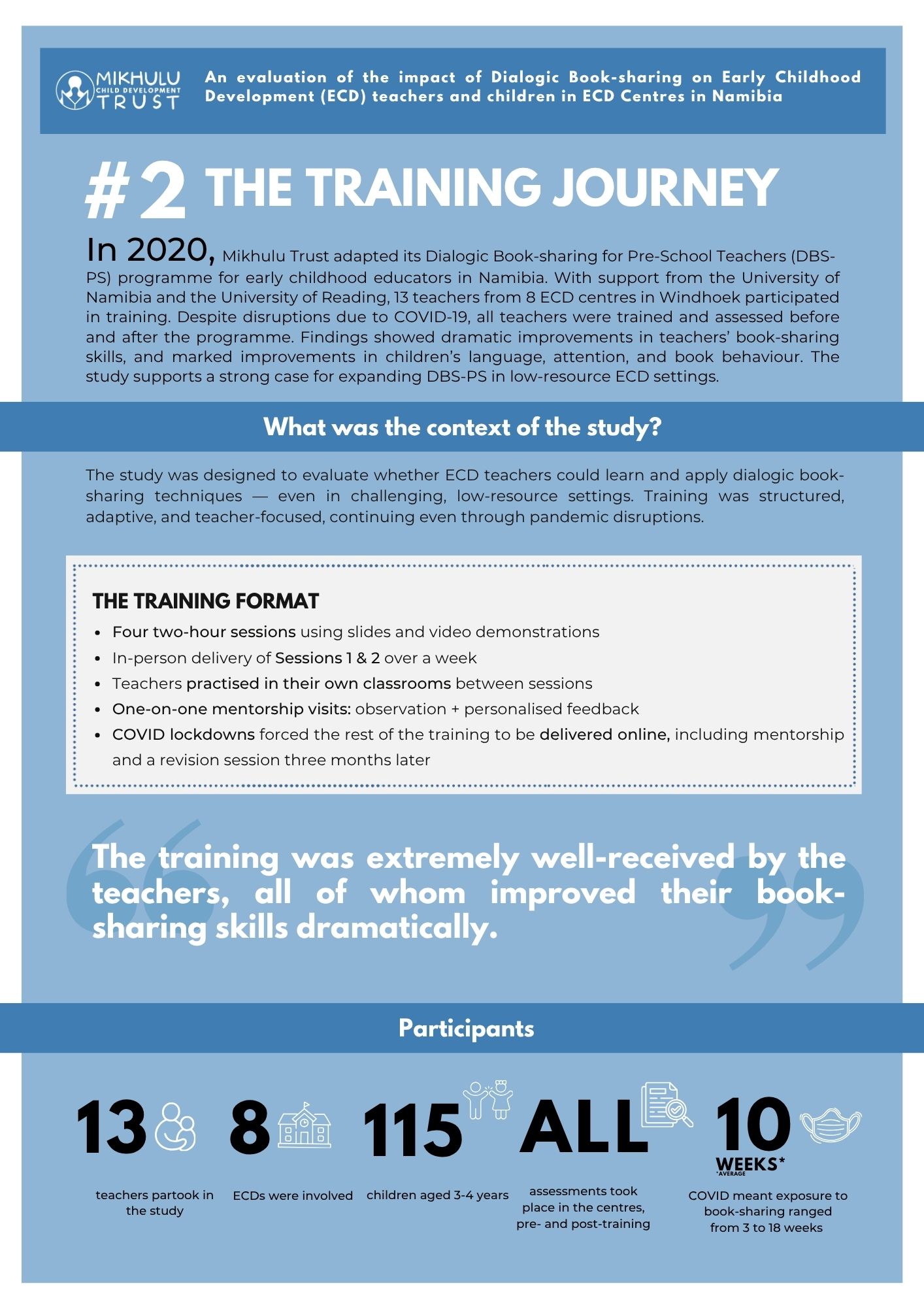
Thirteen teachers from eight ECD centres in Windhoek took part in structured DBS-PS training. The programme combined in-person sessions, classroom practice, and one-on-one mentorship — before COVID forced the rest online. This infographic outlines how the training was designed, who participated, and how the programme adapted under pressure.
The Impact: Teacher Skills and Child Development

After training, every teacher actively encouraged children to participate, and nearly all discussed characters’ feelings and intentions. Children showed equally striking changes: attention difficulties dropped sharply, children’s looking time during book-sharing almost doubled, and language skills — especially the ability to answer “what,” “who,” and “why” questions — showed marked improvement.
Why This Matters: Evidence and Next Steps
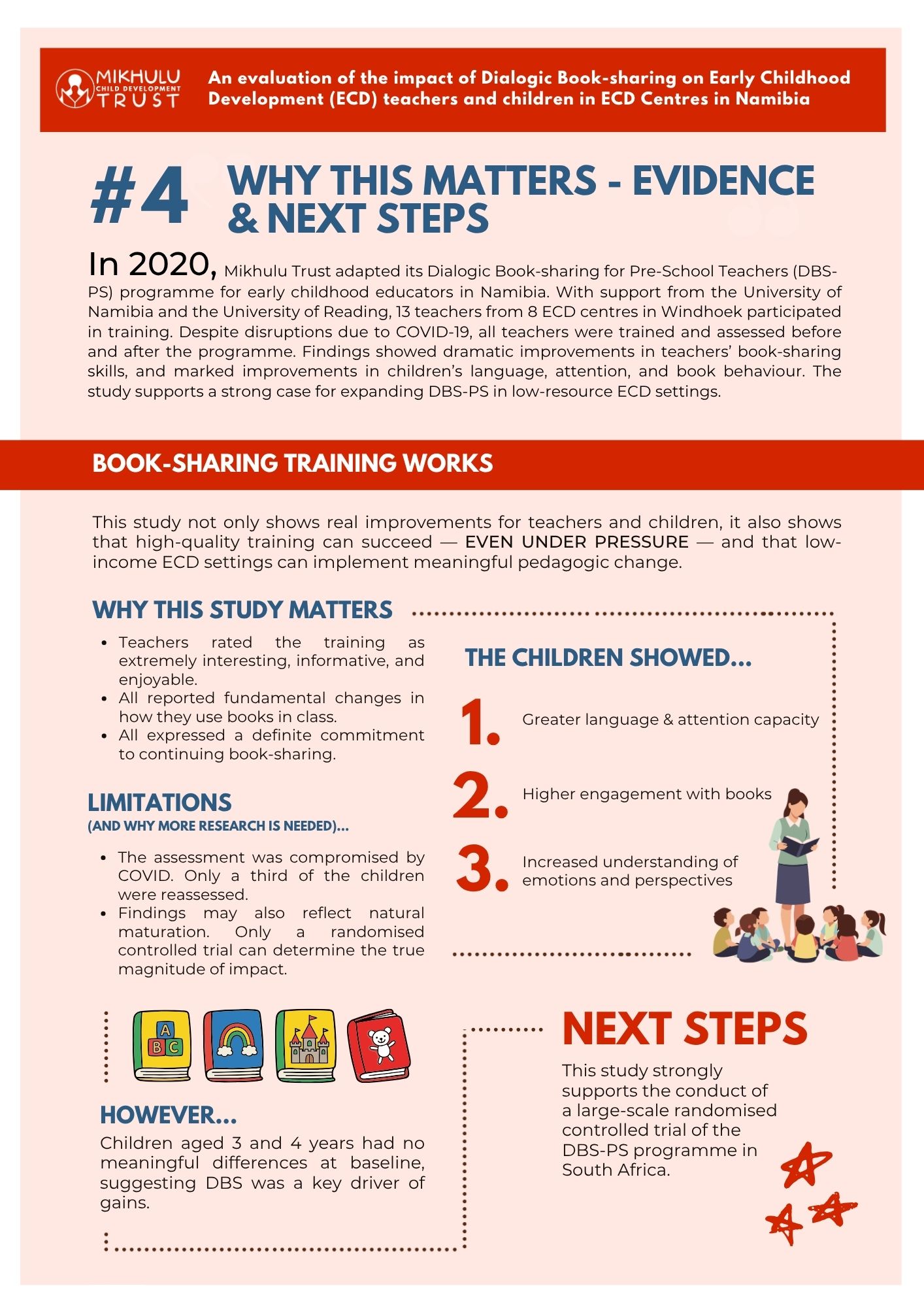
This study demonstrates that high-quality ECD training can succeed even in under-resourced settings disrupted by a global pandemic. It is honest about its limitations — COVID meant only a third of children could be fully reassessed — but the findings are compelling enough to make a strong case for a large-scale randomised controlled trial of DBS-PS in South Africa.
How Book-Sharing Changed the Classroom


In under-resourced ECD centres, storytime is often a one-way experience: teachers read at children, not with them. This infographic captures the shift that DBS training produced — not just in what teachers did, but in how children responded. Attention problems that affected 70% of children at the start of the programme fell to under 10% by the end.
About Mikhulu Trust: Academic roots
The Mikhulu Child Development Trust was established by two research professors: Peter Cooper and Lynne Murray, who are both Emeritus Professors at the University of Reading in the UK. We focus on developing evidence-based programmes for parents and caregivers of young children. We develop and test programmes for parents and their young children. We also design systemic approaches to implementing these programmes by working with government and NPO partners.